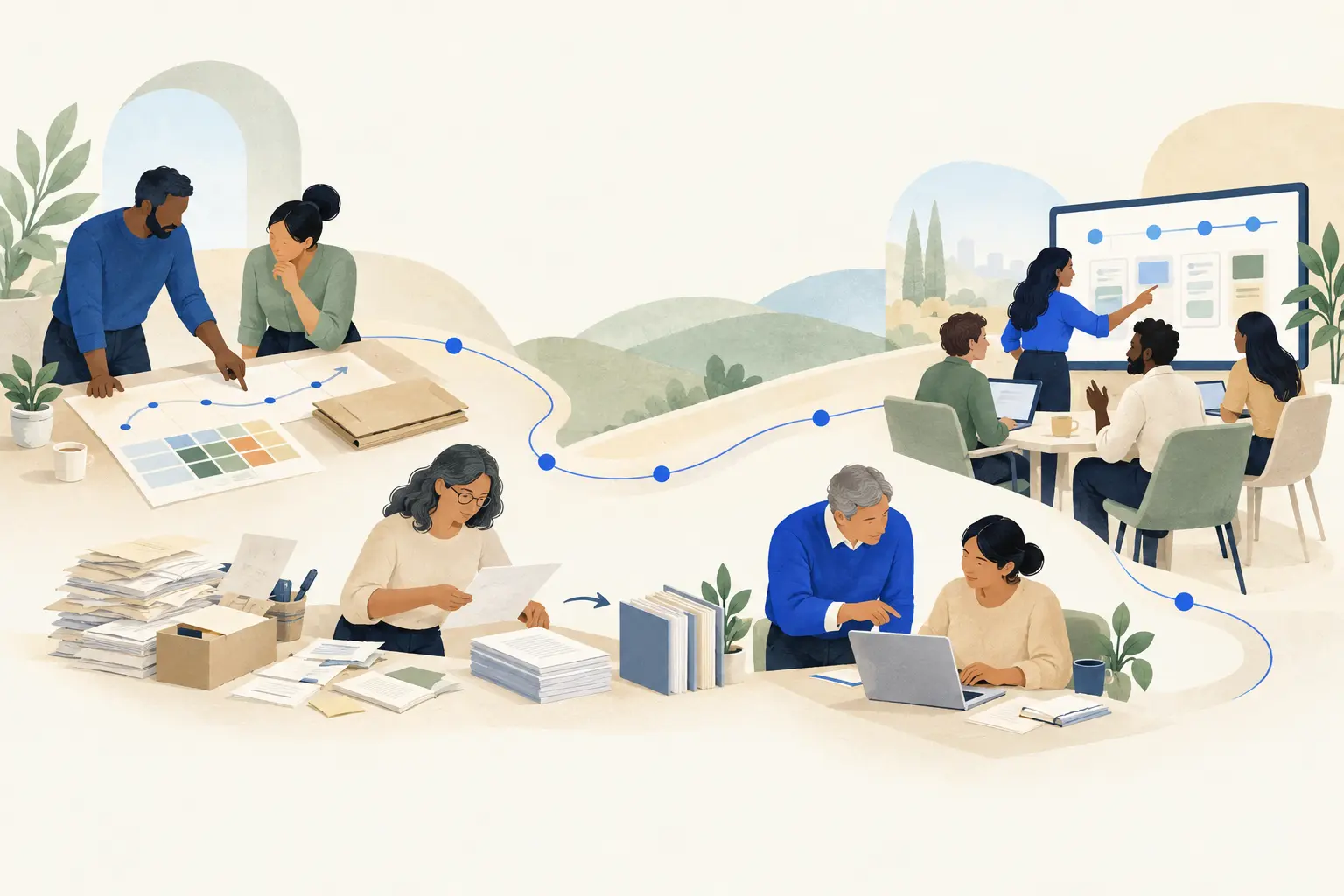
Change starts while the project is being shaped. Early assessment helps you plan the effort and prerequisites, then carry that work into project delivery. The recipe can also be tailored mid-project.
Assess & planPrepare earlyDeliver together
Early planning connects the magnitude of change with the business case, impact heat map, and roadmap. Preparation then becomes part of the project’s change-management work.
KEEP THE PLANNING CONNECTED
From early questions to project change.
Use these inputs together as the initiative takes shape. Revisit the assumptions when the scope, people, timing, or readiness needs change.
01
BEFORE THE PROJECT
Size the change.
Assess what will change in processes, roles, data, technology, and behaviours. Consider the number of teams or sites affected, the complexity, and other changes competing for capacity.
02
INFORM THE DECISIONS
Connect the business case and heat map.
Make change effort, readiness gaps, dependencies, time, and resources visible in the business case. Use an impact heat map to show where attention and support are needed.
03
BUILD THE ROADMAP
Prepare the foundations early.
Give prerequisite work clear owners, capacity, and timing. Data cleanup and basic technology skills may need to start before migration, testing, or platform-specific training.
04
DURING THE PROJECT
Deliver change with the project.
Build on the groundwork through sponsor engagement, communication, role-based learning, readiness checks, and go-live support. Then review adoption, listen, and reinforce the new way of working.
MAKE THE MAGNITUDE VISIBLE
A heat map that helps you plan the work.
Map impacts by affected group and area of change. Discuss readiness alongside the map, then use the priorities to inform effort, ownership, investment, and sequencing.
Illustrative planning example · Relative change impact
Affected group
Process
Data
Technology
Skills
Readiness priority
Data owners
Moderate
High
Moderate
Low
Data quality & validation
Frontline teams
High
Moderate
High
High
Basic digital skills & process practice
Managers
Moderate
Low
Moderate
Moderate
Role clarity & reinforcement
These are sample planning assumptions. Build the actual map with affected teams and refresh it as the project develops.
WHAT EARLY PREPARATION LOOKS LIKE
Make the early work part of the plan.
A move from manual processes to technology can involve groundwork that comes before system training. Two examples show how assessing this early changes the roadmap.
01 /
Clean the data before it needs to move.
A new platform will use information currently held in paper files, spreadsheets, or legacy systems.
See how this shapes the plan +
Spot it early
Check for missing fields, duplicates, inconsistent formats, and unclear data ownership.
Include it in the case and heat map
Make data-owner effort, capacity, validation, and migration dependencies visible in scope, timing, and resourcing.
Prepare before the milestone
Agree owners and quality rules. Schedule cleanup and validation before the migration and testing activities that depend on the data.
Carry it into the project
Connect the cleanup plan with testing, process changes, user guidance, and ongoing data ownership.
We start with the work already in motion. Together, we review the existing plan, refresh the impacts and readiness priorities, and agree the decisions and support needed next.
Update the business-case assumptions where needed, then fit prerequisite work, communication, learning, and support into current milestones and capacity.